The Japanese Solution
Japan has a COVID infection rate of 1 person per 100,000 while the USA rate is about 60 people per 100,000.
And get this. There are a staggering 37 million people in Greater Tokyo and they often travel on packed trains. But Japan has fewer than 20,000 confirmed cases and less than 1,000 deaths.
What’s more, the state of emergency has been lifted, and life is rapidly returning to normal. How can this be? Call it science.
The Japanese research showed almost 80 per cent of infected people weren’t passing the virus. Only 20 per cent were infecting others. These are “super-spreaders” who are very contagious, even though they might not show symptoms.
They also found the virus was mostly being dispersed in crowded, poorly ventilated sites where these spreaders came into close contact and engaged in conversation.
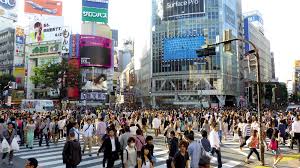
Packing 37 million into one city block
The biggest dangers often involved music venues with screaming, singing, and heavy breathing in close proximity, plus karaoke, parties, clubs, bars and gyms.
So the Japanese blacklisted three High Risks.
- Enclosed spaces with poor ventilation
- Crowded places with many people
- Close contact with face-to-face conversations.
There were other possible factors.
* Japanese people began wearing face masks during the 1919 flu pandemic and they’ve never really stopped. If you get a cough you don a mask to protect those around you.
* There may have been something similar to COVID 19 before, which generated historical immunity. Not just in Japan, but in China, South Korea, Taiwan, Hong Kong and South East Asia.
* Underlying conditions increase vulnerability and Japan has the lowest rates of coronary heart disease and obesity in the developed world.
Japan asked people to take care, stay away from crowded places, wear masks and wash their hands. By and large the population listened and learned.
And much of Japan has now re-opened.

Absorbing all that vitamin D. But be careful with this.
Vitamin D is paramount
Obviously, I’m not your doctor and I’m not a biology Ph.D. But I’ve spent a lot of time researching nutrients and supplements. And you should, too.
The best way to ingest any vitamin or mineral is by eating well. But so much of our food these days is processed or farmed before its enriched. So supplements become virtually mandatory. Yes, there are many “experts” who will insist you’re just urinating dollar bills and maybe they’re right. But, for me, spending a few bucks on nutrients is more than a back-up. It’s a front load.
One of the most important is vitamin D.
There’s evidence people with vitamin D deficiency are nearly twice as likely to test positive for COVID-19. This has been underlined by a study from the University of Chicago.
They say Vitamin D boosts the immune system and lowers the risk of viral infections. It also affects zinc metabolism, which decreases replication of a virus.
The best source is as inexpensive as rain. Sunshine. I get it when I can. But so many people are worried about skin cancer they definitely need a D3 supplement.
The study pointed out half of Americans are deficient in Vitamin D, with much higher rates seen in African Americans, Hispanics, and individuals living in areas where it’s difficult to get enough sun during the winter.
Vitamin D is inexpensive and generally safe but you can overdose so do some research.
Follow My Blog
Get new content delivered directly to your inbox.
 Dave Talks Baseball